What Makes Public Health Marketing Campaigns Actually Work?
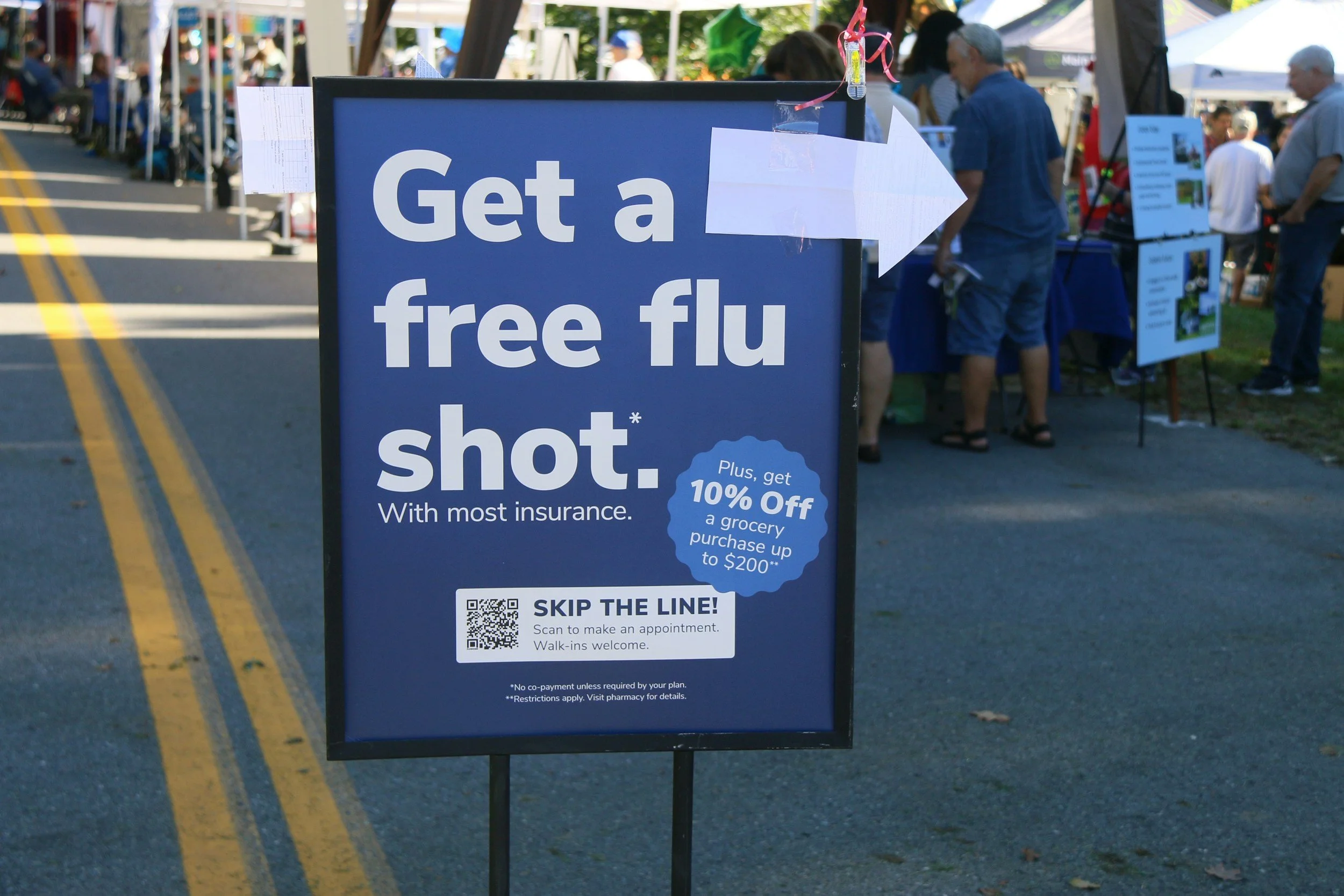
A public health campaign can have a beautiful design, a catchy slogan, and a healthy advertising budget and still fall flat.
Why? Because getting people to see your message isn't the same as getting them to act on it.
Think about how many public health messages people encounter. Get vaccinated. Schedule a screening. Eat healthier. Manage stress. Sign up for benefits. The information may be important, but people are busy, distracted, and sometimes skeptical of the organization delivering it.
And let's be real: nobody has ever said, “You know what I need more of today? Another government brochure full of acronyms.”
The most effective public health marketing campaigns don't start with what an organization wants to say. They start with what the audience needs to hear.
At Market Me Consulting, we've seen how audience research, clear messaging, trusted messengers, and smart media strategies can help government agencies and nonprofits reach people and encourage meaningful action.
Here are eight strategies that can make the difference between a campaign people notice and one that actually makes an impact.
The Bottom Line
Start with audience research. Understand people's needs, motivations, barriers, and media habits before developing your campaign.
Make the message simple and benefits-focused. Tell people what matters to them, why they should care, and what to do next.
Build trust through credible messengers and multiple channels. People are more receptive when information comes from sources they recognize and trust.
Measure action, not just attention. Impressions and clicks are useful, but participation, enrollment, appointments, and behavior change tell a more meaningful story.
What Is Public Health Marketing?
Public health marketing uses audience research, communications, advertising, and community engagement to encourage actions that improve individual and community health.
Campaigns may focus on increasing vaccination rates, encouraging preventive screenings, improving nutrition, connecting people with mental health resources, or increasing enrollment in public benefits programs.
Unlike traditional marketing, which often focuses on generating sales, public health marketing typically aims to improve health knowledge, increase access to services, or encourage healthier behaviors.
It also overlaps with social marketing, which applies marketing principles to influence behaviors that benefit individuals and communities.
But there's an important distinction between sharing information and changing behavior.
A campaign that reaches 100,000 people with information about cancer screenings may generate valuable awareness. But if the goal is to increase screenings, we also need to understand whether people scheduled appointments and what prevented others from doing so.
In short: Public health marketing is about moving people from awareness to meaningful action, not simply delivering information.
Why Do Some Public Health Marketing Campaigns Fall Short?
Often, the challenge isn't a lack of effort or creative talent.
It's that campaigns are developed from the organization's perspective rather than the audience's.
A health department might want to communicate eligibility requirements for a program. But the intended audience may be wondering something entirely different:
Will this help my family? Is it really free? Will applying take forever? Can I trust this organization?
Those are the questions a successful campaign needs to answer.
Other common challenges include complicated language, generic messaging, limited community input, poorly selected advertising channels, and unclear calls to action.
Sometimes the advertising works perfectly, but the service experience creates barriers. People click the ad only to discover a confusing website, a long application, or an unanswered phone number.
Marketing can't solve every operational challenge. But effective campaign planning should identify those barriers and work with program teams to address them.
Let's look at the strategies that make the biggest difference.
1. Conduct Audience Research Before Building Your Campaign
If you want to understand why people aren't using a health service, here's a radical idea: ask them.
Too often, organizations jump straight into campaign development based on internal assumptions about what their audiences need.
Market research helps replace those assumptions with actual insights.
Depending on your budget and timeline, research might include:
Focus groups with members of your target audience
One-on-one interviews
Short surveys
Conversations with community organizations
Reviews of existing program data
Analysis of audience media habits and preferences
The goal isn't simply to learn demographic characteristics. It's to understand what people think, feel, need, and experience.
For example, if you're promoting a preventive screening program, you might discover that people aren't avoiding screenings because they don't understand their importance.
They may be concerned about cost, transportation, time away from work, or what happens if the screening identifies a problem.
Those insights should shape your messaging and outreach strategy.
Ask questions such as:
What matters most to this audience? What benefits would motivate them to act?
What's getting in the way? Are there practical, emotional, financial, or informational barriers?
Where do they get information? Which websites, social platforms, radio stations, community organizations, or individuals do they trust?
What language do they use? How do people naturally describe the issue, service, or challenge?
One important point: avoid treating an entire community as one audience. Age, language, neighborhood, lived experience, and access to services can create meaningful differences within a population.
In short: The more you understand your audience, the less you have to guess about what will resonate.
2. Use Plain Language People Can Actually Understand
Public health information can be complicated.
Your marketing message shouldn't be.
One of the most effective ways to improve health communications is to use plain language—clear, familiar words that make information easy to find, understand, and use.
For general-audience campaigns, aiming for approximately a fifth-grade reading level can be a helpful starting point. But readability scores alone aren't enough. You still need to test whether real people understand the message.
Consider the difference:
Instead of: “Eligible beneficiaries are encouraged to utilize preventive healthcare services.”
Try: “You may qualify for free health screenings. Find out how to get started.”
The second version is shorter, clearer, and more actionable.
A few practical guidelines:
Use everyday words instead of technical terms.
Keep sentences short.
Explain unfamiliar health terms.
Focus each message on one main idea.
Use active language.
Make instructions easy to follow.
Plain language also means communicating in the languages your audiences actually use, with culturally appropriate translations rather than word-for-word substitutions.
And remember that accessible communications go beyond reading level. Visual contrast, captions, screen-reader compatibility, and accessible formats matter, too.
Simple language isn't dumbing down your message. It's making your message work harder.
3. Keep Your Public Health Message Simple and Focused
Here's a familiar scenario.
A campaign starts with one clear objective. Then different departments review the creative.
Someone wants to add eligibility requirements. Another person wants to include program history. Someone else suggests mentioning three related services.
Suddenly, a simple ad looks like a miniature annual report.
Every additional message competes for attention.
Instead, identify the single most important thing you want your audience to understand or do.
For example, a campaign promoting a nutrition assistance program might focus on:
“Get help buying healthy food for your family.”
Supporting materials can explain eligibility, application requirements, and other details.
But the first message needs to earn attention and communicate value.
This is particularly important for paid advertising, where people may encounter your message for only a few seconds.
A useful test is to show your ad to someone unfamiliar with the program for five seconds.
Then ask:
What was the message? Who was it for? What should someone do next?
If they can't answer, simplify.
In short: One memorable message is usually more effective than five competing ones.
4. Write Headlines That Make People Stop and Pay Attention
Your headline has one job: get people interested enough to keep reading, watching, or listening.
That's no small task when you're competing with social media, news, entertainment, texts, and everything else demanding attention.
Public health campaigns sometimes lead with the organization's name or a formal program title.
But unless your audience is already familiar with that program, those details may not give them a reason to engage.
A stronger headline speaks directly to an audience need, concern, or benefit.
For example:
Program-focused: “District Nutrition Assistance Program Enrollment”
Audience-focused: “Need Help Buying Healthy Food for Your Family?”
Or:
Program-focused: “Behavioral Health Resource Awareness Initiative”
Audience-focused: “Feeling Overwhelmed? Support Is Available.”
The audience-focused versions are examples, not tested campaign headlines. Actual wording should be informed by research and reviewed for accuracy.
You can also test different approaches: a question, a direct benefit, a reassuring statement, or a clear invitation to act.
Avoid fear-based headlines or exaggerated claims simply to attract attention. Especially in public health, attention should never come at the expense of accuracy or trust.
A good headline gets attention. A great one gives people a reason to care.
5. Focus on Benefits, Not Just Program Features
Organizations naturally want to talk about their services.
Audiences want to know how those services can help them.
That distinction matters.
A campaign that says “Our program offers comprehensive nutrition education and supplemental food benefits” describes what the organization provides.
A message such as “Get help buying healthy food for your family” communicates a potential benefit.
Both may be accurate, but the second immediately connects the service to something the audience values.
When developing benefits-focused messaging, ask:
What's in it for the audience?
Will the program help them save money, access care, feel supported, protect their family, or navigate a complicated process?
Then connect that benefit to a clear action.
For example:
Benefit: Get support for your mental well-being.
Action: Explore free local resources.
Benefits should always be truthful, specific, and supported by the actual program offering.
And don't confuse benefits-focused messaging with promising outcomes you can't guarantee. A screening can help someone understand their health risks; it can't promise they'll never develop an illness.
For more ideas on making information relatable, see our article on storytelling in marketing.
In short: Don't just explain what your program does. Show people why it matters to them.
6. Use Trusted Messengers to Build Credibility
Public health campaigns often face a challenge that even the best creative can't solve on its own: trust.
Some communities may be skeptical of government institutions or healthcare systems because of past experiences, inconsistent information, or concerns about how their information will be used.
That doesn't mean people are unwilling to listen.
It means the messenger matters.
Trusted messengers might include:
Community health workers
Healthcare professionals
Faith and community leaders
Local nonprofit organizations
Neighborhood associations
Educators
People with relevant lived experience
Local businesses
The right messenger depends on the audience and the issue.
A respected neighborhood organization may be more effective at explaining a public benefits program than a generic government advertisement. A local healthcare provider may be particularly helpful when communicating about screenings or vaccinations.
But trust can't simply be borrowed by putting someone's face on a flyer.
Involve community partners early. Ask for their input, share accurate information, compensate them when appropriate, and provide materials they can adapt for their audiences.
And don't assume one messenger speaks for an entire community.
In short: Trusted messengers help make public health information more credible, relatable, and accessible.
7. Use Multiple Marketing Channels to Reach Your Audience
Not everyone gets their information from social media.
Shocking, I know.
Some people rely on radio. Others pay attention to local television, community newspapers, transit advertising, websites, or information shared by neighborhood organizations.
Even among people who use digital media, habits differ.
That's why effective public health advertising campaigns often use a coordinated mix of digital and traditional channels.
Depending on your audience, that might include:
Digital channels: Social media, search advertising, online video, display advertising, email, and mobile-friendly websites.
Traditional channels: Radio, television, transit advertising, print publications, posters, and direct mail.
Community channels: Health clinics, libraries, schools, neighborhood organizations, community events, and trusted partner networks.
The goal isn't to advertise everywhere.
It's to choose the combination of channels most likely to reach your priority audiences efficiently and repeatedly.
For example, digital advertising may help you test creative quickly, while community partners can help reinforce the message through trusted, personal interactions.
A strong channel strategy also considers what happens after someone responds.
If an ad encourages people to call for services, make sure the phone experience supports the campaign. If the ad directs people to a website, ensure the page is easy to navigate and works on mobile devices.
Our article on digital marketing for the public sector explores additional ways government agencies can connect with residents.
In short: Meet people where they are, not simply where it's most convenient for your organization to advertise.
8. Test, Learn, and Optimize Your Campaign
Launching a campaign isn't the finish line.
It's the beginning of learning what works.
One of the biggest advantages of digital advertising is the ability to test different messages, images, headlines, and audiences relatively quickly.
For campaigns where digital channels are appropriate, consider launching with a controlled testing phase before committing your full media budget.
You might test:
A benefits-focused headline versus a question
A photograph versus an illustrated graphic
A short video versus a static image
Different calls to action
Different audience segments or placements
Review the results and invest more in the combinations that are performing well.
But don't assume the ad with the most clicks is automatically the winner.
If one message generates twice as many clicks but very few program inquiries, while another produces fewer clicks and more completed applications, the second may be more valuable.
Also remember that a digital-first testing strategy isn't appropriate for every audience. If your research shows that important segments are primarily reached through radio, print, or community outreach, include those channels in the testing plan.
In short: Treat your campaign as something you improve, not something you simply launch and hope for the best.
Real Examples of Public Health Marketing in Action
These principles aren't just theoretical. Here are three examples from Market Me Consulting's work with DC government agencies.
Case Study 1: Reaching Young Adults With Behavioral Health Resources
The challenge: The DC Department of Behavioral Health wanted to increase awareness of mental health, substance use, and available support services among youth and young adults.
What we did: Our team conducted interviews and focus groups with young adults, recruited and trained a youth social media apprentice, developed a targeted social media strategy, and created ongoing multimedia content tailored to the audience.
The results: The campaign generated more than 2 million impressions and 145,000 engagements, with a reported 7.4% engagement rate.
The takeaway: Audience participation in campaign development can help make communications more relevant and engaging. In this case, the campaign demonstrated substantial reach and interaction, although those metrics alone don't establish changes in healthcare utilization.
Case Study 2: Helping DC Families Access WIC Services
The challenge: DC Health's Women, Infants, and Children (WIC) program wanted to reach more eligible women and children and strengthen the use of available benefits.
What we did: Our team developed a three-year, data-driven marketing and outreach strategy, using market research and audience insights to guide recommendations.
The results: The work produced a long-term strategy focused on improving awareness, outreach, and benefit utilization. Publicly available case information does not establish a specific enrollment increase attributable to the strategy.
The takeaway: Public health marketing begins with understanding the audience and designing an approach around their needs—not simply promoting the program's features.
Case Study 3: Supporting Educator Mental Health and Wellness
The challenge: The DC Department of Behavioral Health wanted to support educators' mental health and increase engagement with wellness resources.
What we did: Market Me Consulting developed a social marketing approach that incorporated tailored wellness materials, interactive workshops, and ongoing resources.
The results: Our published case study reports a 33% increase in participation.
The takeaway: Marketing can help people discover and engage with services that support their well-being. When outreach and program experiences reinforce each other, the impact can extend beyond awareness.
How to Build a Public Health Marketing Campaign: A Six-Step Framework
If you're planning a new campaign, here's a practical framework your team can use.
Step 1: Define the outcome. Decide what you want people to do. Is the goal awareness, screening appointments, program enrollment, or a specific behavior change?
Step 2: Understand the audience. Conduct research to identify motivations, barriers, trusted sources, language needs, and media habits.
Step 3: Develop and test the message. Create simple, benefits-focused messaging with a compelling headline and clear next step. Test it with actual audience members.
Step 4: Select channels and partners. Choose media channels and trusted messengers based on audience behavior, not assumptions.
Step 5: Launch and optimize. Monitor performance, test creative and placements, and make adjustments based on results.
Step 6: Measure meaningful outcomes. Evaluate awareness, engagement, inquiries, appointments, enrollment, or other results tied to your campaign goals.
The framework is straightforward. The value comes from doing each step intentionally.
How Do You Measure Public Health Marketing Campaign Success?
One of the most important questions to ask before launching a campaign is: How will we know whether it worked?
The answer depends on what you were trying to accomplish.
Campaign Goal & Useful Measures:
Build awareness - Reach, recall, awareness surveys
Increase engagement - Video views, website visits, meaningful interactions
Generate interest - Calls, inquiries, form starts
Encourage action - Appointments, completed applications, enrollments
Support behavior change - Follow-up surveys, relevant behavior indicators
Improve access - Participation among priority populations, identified barriers
Not every campaign can directly measure long-term health outcomes, especially when many factors influence those outcomes.
But every campaign should have a clear measurement plan that connects marketing activity to the desired action as closely as possible.
Whenever feasible, establish baseline measures before launch. That allows you to compare results over time and avoid confusing campaign activity with campaign impact.
And if your advertising generates strong interest but few completed actions, investigate the full experience before assuming the messaging failed.
The most meaningful measure of success isn't how many people saw your campaign. It's what happened because of it.
A Quick Reality Check
Before your next public health campaign launches, ask yourself:
Have we actually spoken with the people we're trying to reach or are we relying mostly on internal assumptions?
Could someone understand our message and know what to do next within a few seconds?
Are we measuring meaningful actions, or mainly reporting how many people saw our ads?
If any of these questions give you pause, that's useful information. It may point to an opportunity to strengthen your campaign before investing more resources.
Final Thoughts: Effective Public Health Marketing Starts With People
Public health marketing isn't about having the biggest budget, the most creative slogan, or the longest list of advertising channels.
It's about understanding people.
What matters to them? What gets in their way? Who do they trust? What would make taking action easier?
When organizations answer those questions first, they can build campaigns that are clearer, more relevant, and better positioned to achieve meaningful outcomes.
Because the goal of public health marketing isn't simply to get the message out. It's to help people take the next step toward better health.
Ready to Strengthen Your Public Health Marketing Strategy?
At Market Me Consulting, we help government agencies, nonprofits, and mission-driven organizations develop research-informed marketing strategies that connect with communities and inspire action.
Whether you're planning a new public health awareness campaign, promoting program enrollment, or looking to improve an existing initiative, we'd welcome the opportunity to talk.
Schedule a discovery call to discuss your goals, audiences, and opportunities to make your next campaign more effective.
No pressure. Just a practical conversation about how to make your marketing work harder for the people you serve.
Frequently Asked Questions About Public Health Marketing
What makes a public health marketing campaign effective?
An effective public health marketing campaign combines audience research, clear and benefits-focused messaging, trusted messengers, appropriate media channels, and meaningful measurement. It focuses on helping people understand and act on health information rather than simply increasing exposure.
What is the difference between public health marketing and health education?
Health education primarily helps people build knowledge and skills related to health. Public health marketing uses audience research, messaging, outreach, and marketing strategies to encourage specific actions, such as scheduling a screening or enrolling in a health program. The two approaches often work together.
Why is market research important for public health campaigns?
Market research helps organizations understand their audiences' motivations, concerns, barriers, and communication preferences. Those insights make it easier to develop relevant messages, select appropriate channels, and avoid costly assumptions.
What reading level should public health marketing materials use?
For broad public audiences, approximately a fifth-grade reading level is a useful starting point. However, the most important goal is that the intended audience can easily understand and act on the information. Organizations should test materials with real users and provide appropriate language and accessibility options.
What marketing channels work best for public health campaigns?
The best channels depend on the audience. Digital advertising, social media, television, radio, transit, print, and community outreach can all work, depending on the situation. Audience research should guide the media mix, and coordinated channels can reinforce one another.
How can public health campaigns measure behavior change?
Campaigns can measure behavior change through completed applications, appointments, program participation, and follow-up surveys. When possible, comparing baseline and post-campaign data can help assess changes, although organizations should account for other factors that may influence results.